



Ganesh Statues Meaning: Mythology, Symbolism, History, Materials and Ritual Significance of Lord Ganesh
Lord Ganesh, the elephant-headed deity, is associated in Hindu tradition with wisdom, prosperity, and the clearing of obstacles. His image is one of the most recognisable in the world, and also one of the most densely coded: a statue is not only a portrait but a set of instructions, where the ears, the trunk, the tusk and even the belly each carry a meaning.
That is what makes Ganesh statues worth a longer look. This article follows the figure from his origin story through two thousand years of sculpture, then turns to the materials, the symbolism, the festivals, and the practical questions people ask before bringing a statue home.
- Ganesh's Mythical Origins
- Ganesh Statues: A Historical Journey
- Regional Artistry and Material Choices
- Decoding Ganesh Imagery
- Celebrations and Rituals
- The Contemporary Appeal of Ganesh Statues
- Ganesh Statues FAQ
- Conclusion
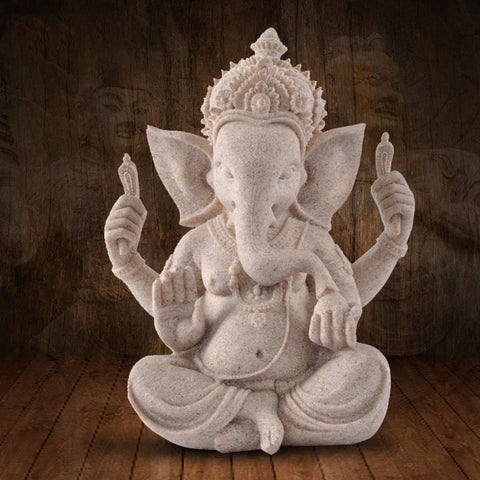
Ganesh's Mythical Origins
The mythology of Lord Ganesh is rooted in the Hindu epics, and the story of his birth explains both his unusual form and his position as the god invoked first.
The Birth of Ganesh
Ganesh is the son of Shiva, the destroyer, and Parvati, goddess of nourishment. The version most often told begins with Parvati preparing to bathe. Wanting privacy and someone to guard the door, she shaped a boy from the turmeric paste and oil she had rubbed from her own skin and gave him life.
The act is practical and symbolic at once: the child is made from his mother's own substance, which is why he belongs to her before anyone else.
The Protector and the Misunderstanding
Parvati set the boy at her chamber door and told him to let no one pass. He took the order literally, which is the beginning of his reputation for duty.
When Shiva came home and found a stranger refusing him entry, neither knew who the other was. The argument escalated.
The Transformation
In his fury Shiva struck the boy's head from his body. Only afterwards did Parvati's grief make clear what had happened, and the narrative turns there.
To repair the damage, Shiva's followers were sent to find the first creature facing north, and bring its head. That creature was an elephant.
Ganesh's Resurrection
The elephant head carries its own meaning: wisdom, patience, and a mild temperament suited to the role of gatekeeper and remover of obstacles. Restored to life, Ganesh was given a position above many of the older gods and the power to clear the way for others.
It is worth noticing that the story does not present him as self-made. He begins as a guard made from discarded paste and ends as one of the most loved figures in the pantheon.
The Enduring Legacy
The tale touches on regeneration, duty, and the cost of acting without understanding — and it accounts for a form that sculptors have been interpreting ever since. Every later statue is a reading of this story.
Ganesh Statues: A Historical Journey
Ganesh statues have been part of Indian culture for more than two thousand years; the earliest surviving representations date from the first centuries CE, when he appeared in relief rather than as a free-standing figure.
Stone and clay came first, since both were close to hand. Bronzes followed, then gold and silver for temple commissions, and the form travelled with trade routes well beyond the subcontinent.
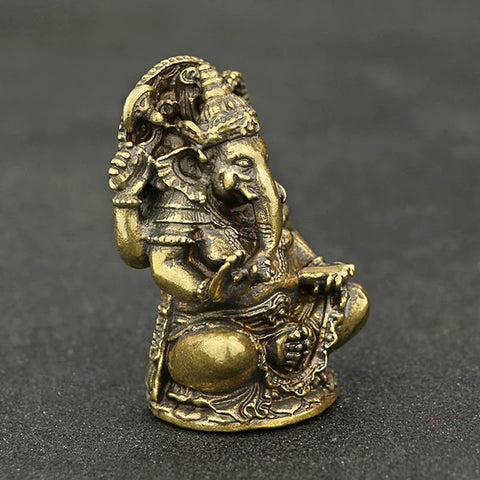
Regional Artistry and Material Choices
Style in Ganesh sculpture is largely a matter of geography. What a workshop used depended on what the region could quarry or import, and the material in turn set the limits of the carving.
In southern India, granite is common: a hard stone that forces simplified lines and rewards patience. The Chola dynasty, which ruled between the 9th and 13th centuries, is the standard reference for bronze work, and Chola-style Ganesh statues are still among the most studied pieces of Indian metalwork.
Marble, wood, and terracotta each bring something different. Marble takes a high polish and suits interior display; wood allows fine detail and ages visibly; terracotta is the traditional material for festival figures, made to be dissolved in water at the end of the celebration.
Decoding Ganesh Imagery
Ganesh statues are dense with symbolism, and each element is there on purpose.
- The elephant head stands for wisdom and intellect; the large ears for listening more than one speaks.
- The trunk represents adaptability — strength that can lift a heavy weight and also pick up something delicate.
- The single broken tusk is read as a lesson in keeping what is useful and letting go of what is not; one tradition also has him snapping it off to write the Mahabharata when his pen failed.
- The potbelly is the world contained, and the capacity to digest whatever life presents.
- Whether he sits on a lotus or with the mouse Mooshika at his feet, the message is the same: spiritual clarity, with desire kept in its place.
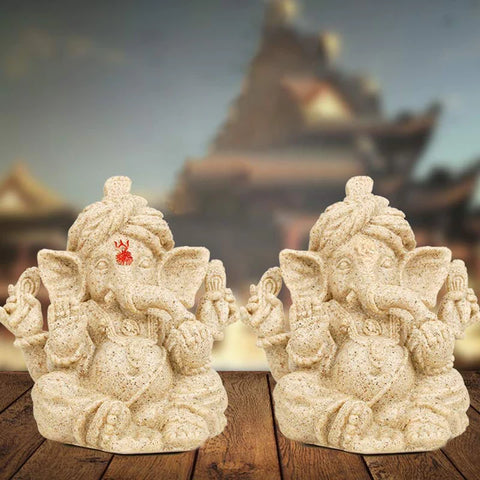
Celebrations and Rituals
Ganesh statues are central to a number of festivals, above all Ganesh Chaturthi, the ten-day celebration of his birth. He also turns up in national celebrations, as this piece on Ganesh during Independence Day describes.
Households install a clay figure, often made for the occasion, and offer prayers, flowers, and sweets — modaks in particular. The festival ends with the immersion of the statue in a river or the sea, marking his return to Mount Kailash and his parents' home.
Outside the festival calendar, Ganesh is invoked at weddings, housewarmings, and business openings, and before a journey or an exam. The logic is consistent: he is asked to remove what stands in the way before anything else begins.
The Contemporary Appeal of Ganesh Statues
A Ganesh statue holds a contemporary interior for two reasons at once. The silhouette is strong enough to carry a shelf or an entrance on its own, and the associations — wisdom, prosperity, protection — travel with it without the room having to look traditional.
Scale and material decide where a piece belongs. A small brass or bronze figure suits a desk or a windowsill; a carved stone piece of any size wants floor space and, at least once in a while, direct light. For a living room or entryway, a hand-carved Ganesh statue in brass or stone is usually the right starting point, and the wider selection gathers the other materials and finishes in one place.
The figure also works at small scale. A palm-sized statue on a work desk does the same job as a large one in a hall, which is part of why the motif has kept its place outside India.
Ganesh Statues FAQ
Which direction should a Ganesh statue face at home?
Tradition places him in the northeast corner of the house or the prayer room, on a raised surface, facing into the room rather than out of the door. Keeping the area around the statue uncluttered matters more than exact angles: he is a guest, not an ornament.
Why do some Ganesh statues have a trunk that curves to the right?
A right-curving trunk marks a stricter form, associated with siddhi (attainment) and traditionally worshipped with more elaborate ritual. The left-curving trunk is the everyday version, connected with iddhi and found in most homes. Neither is a defect; they are different standards of worship.
Is it acceptable to keep a Ganesh statue in an office or a shop?
Yes, and it is common practice. The usual precautions are the same ones that apply at home: keep the statue off the floor, away from bathrooms and the underside of staircases, and keep it clean. A counter or a desk corner near the entrance is considered a good position.
What is normally offered to a Ganesh statue?
Red flowers, durva grass, coconut, and something sweet — modak or jaggery — are the traditional offerings, with incense and a lamp. Daily worship is short in most households: a few minutes and a simple mantra are enough, and many people confine full ritual to festivals.
What should be done with a broken statue?
Small chips are usually left alone or repaired, since the figure is not treated as disposable. A badly damaged statue is not thrown out with household waste; the customary route is immersion in water or return to the earth, the same respectful end given to festival figures.
Conclusion
A Ganesh statue works on two levels that rarely sit together this comfortably: it is a well-made object that can hold a room, and it is a summary of a story about duty, loss, and repair. The attributes are not decoration — they are the story, written into the form.
Buy or place one with that in mind, give it a position it can be respected in, and the figure keeps doing what it was made to do: marking beginnings.