



Red Agate: Banding, Colour Treatments and Carnelian
Red agate is valued for the way bands and color appear in a cut piece. One slice may show brick-red layers beside white and gray; another may have faint parallel lines that become clearer only when held to light.
The name on a listing does not establish whether the color is natural or enhanced. Chalcedony can accept dye, and treatments have long been used to create stronger or more even colors.
A useful comparison begins with the exact item: inspect its banding, color distribution, finish, construction, and treatment disclosure. Personal symbolism can follow those checks, without turning the stone into a cure or guarantee of vitality.
Agate Is Banded Chalcedony
Agate is generally defined as a banded variety of chalcedony, a microcrystalline form of silica made largely of tiny quartz crystals with moganite. The crystals are too small to see individually without specialized methods.
Bands can differ in color, translucency, porosity, and microscopic texture. They may curve around a cavity, run in parallel layers, or form complex shapes that a cutter reveals through slicing and polishing.
Not every red chalcedony is agate. Visible or internal banding supports the agate name, while a more evenly colored translucent red-to-orange material is often described as carnelian. Trade usage is not always consistent.
How Agate Banding Forms
Agates commonly develop in cavities in volcanic rock, though they also occur in other geological settings. Silica-rich fluids deposit chalcedony in repeated layers within the available space.
The detailed mechanism behind rhythmic bands is complex and is still studied. Color and pattern reflect differences in mineral inclusions, porosity, crystal texture, chemistry, temperature, pressure, and the timing of fluid movement.
It is safer to describe what can be observed than to claim that every red agate formed through one simple sequence over a fixed number of years.
Red Colour and Iron
Red, orange, brown, and yellow colors in agate are often related to iron-bearing minerals or oxides within the silica. Their concentration and distribution can highlight or obscure the underlying bands.
Color may be pale, earthy, or highly saturated. A vivid uniform red is not automatically more natural or more valuable than a muted piece with distinct banding.
View the item in neutral daylight and indoor light. Dark backgrounds, strong transmitted light, wet surfaces, and edited product photos can change how intense the color appears.
Red Agate and Carnelian
Carnelian is a translucent orange to reddish-brown variety of chalcedony, usually valued for relatively even bodycolor rather than pronounced agate banding. Sard is a related darker brownish-red term used inconsistently in the trade.
A stone can sit near the boundary between names. Weakly banded reddish chalcedony may be sold as carnelian agate, red agate, or carnelian depending on the seller and market.
Ask for photos in transmitted and reflected light and focus on the actual pattern, transparency, and treatment rather than expecting every dealer to apply the boundary identically.
Dyed and Heat-Enhanced Colour
Chalcedony is among the gem materials commonly dyed. Dye can create a deeper, more even, or entirely different color, while heating may alter iron-related coloration in some materials.
A treatment does not automatically make jewelry unsuitable, but it should be disclosed because it affects comparison, value, and care. Dyed color may collect differently in porous areas, fractures, or drill holes, though those clues are not conclusive by themselves.
When color status matters, use a qualified gemologist. Acetone, alcohol, scraping, hot needles, and other home experiments can damage the jewelry and still give an uncertain result.
What to Ask About Colour
Ask whether the red color is natural, heated, dyed, coated, impregnated, or otherwise enhanced. Request the answer in writing and check whether it applies to the exact item rather than the product category.
Ask whether listing images were edited and whether they show the actual piece. A short video under neutral light helps reveal banding, translucency, surface polish, and color variation.
If a laboratory report is offered, confirm that the report number, measurements, material, and photographs match the stone or finished item.
Cutting to Use the Bands
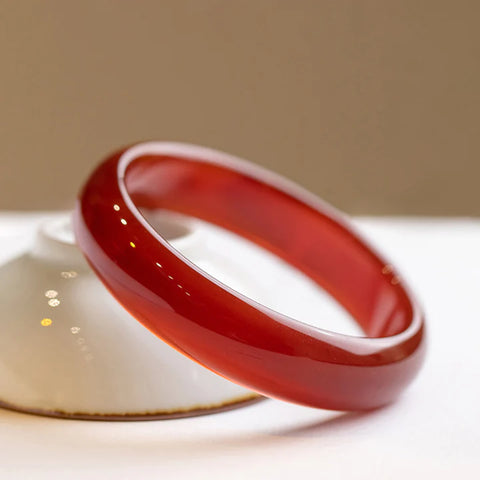
The direction of a cut can transform the same rough. A cross-section may show concentric curves, while a cut along the layers can reveal stripes. Carvers may use contrasting bands to separate a figure from its background.
Cabochons, beads, seals, cameos, and flat slices each display the material differently. Look for a pattern placed deliberately rather than an interesting band hidden at the edge or beneath a setting.
Check polish across bands because layers with different textures may undercut or wear unevenly. Natural-looking pits can be acceptable, but sharp cavities and cracks near drill holes affect durability.
Choosing a Bracelet
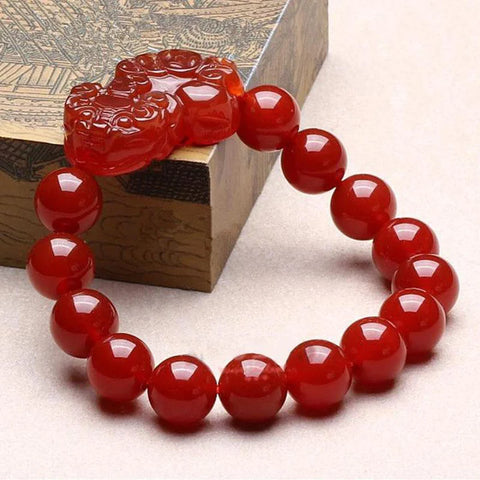
Check bead diameter, inner fit, total weight, drill holes, color matching, elastic or cord, knots, spacers, and metal parts. Large beads reduce the usable inner circumference.
Decide whether you want evenly matched beads or a strand that shows broad natural-looking variation. Neither approach is automatically better, but the listing should represent what will arrive.
Roll elastic over the hand rather than stretching one section. Replace cord when it becomes fuzzy, flattened, loose, cracked, or permanently extended.
Wearing and Personal Symbolism
Red agate is often associated with protection, courage, endurance, grounding, or vitality. These are cultural and personal interpretations, not measured effects of the banding or iron content.
There is no physical rule that one wrist makes the stone receive energy and the other sends it out. Choose the side that is comfortable, safe, and less likely to knock the bracelet against a desk or tool.

If the color represents persistence, connect it to a concrete action such as returning to a paused project. The stone can mark the intention without claiming to produce the result.
Cleaning and Colour Care
For many intact untreated agate pieces, warm water, mild soap, and a soft cloth or brush are practical. The finished item may also contain dye, coating, glue, elastic, plating, or other stones that need gentler care.
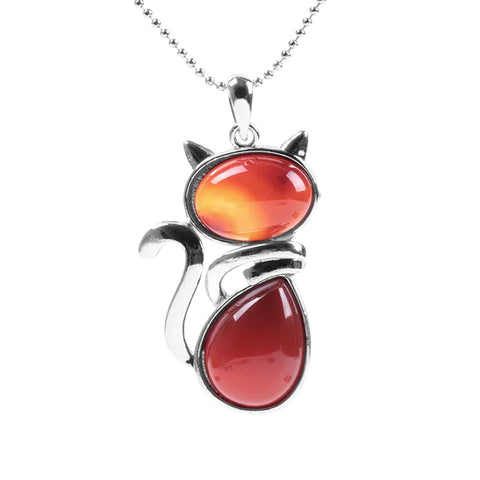
GIA advises keeping known dyed materials away from acetone and alcohol, which can dissolve some dyes, and from prolonged strong sunlight that may fade unstable color.
Remove the jewelry for bathing, swimming, exercise, household cleaning, and work with chemicals. Dry it thoroughly and store it separately from harder gems that could scratch the surface.
Questions to Ask Before Buying
Ask: Is the material banded agate or another chalcedony? Is the red color natural or enhanced? Does the photo show the exact piece? What are the dimensions, weight, construction materials, and return terms?
For a historical, archaeological, Roman, Qing, or named-source claim, request documentation specific to the object. A design inspired by an old style is not the same as an authenticated artifact.
Avoid choosing by claims that the stone cures blood disorders, boosts hormones, stops anxiety, or guarantees protection. Such statements do not verify the material or improve the workmanship.
Conclusion
Choose red agate by the piece you can inspect, not a generic promise of vitality. Clear photos and treatment information make the comparison more useful.
Look for banding you enjoy, a cut that uses it well, and sound jewelry construction. Ask how the color was produced and care for the finished piece according to its most sensitive component.
Factual References
Gemological Institute of America, “Structures Behind the Spectacle”: https://www.gia.edu/gems-gemology/summer-2025-phenomenal-gemstones
Gemological Institute of America, “An Introduction to Gem Treatments”: https://www.gia.edu/gem-treatment
Gemological Institute of America, “Gem Cutters Reveal the Beauty of Chalcedony”: https://www.gia.edu/gia-news-research/gem-cutters-reveal-beauty-chalcedony
Gemological Institute of America, “Condor Agate from Argentina”: https://www.gia.edu/gems-gemology/spring-2019-microworld-condor-agate-from-argentina
Related Reading
Frequently Asked Questions
What makes red agate red
Red, orange, brown, and yellow colors are often related to iron-bearing minerals or oxides within the chalcedony. Dye and other enhancement may also affect commercial material.
Are red agate and carnelian the same
Both are chalcedony. Agate is defined by banding, while carnelian is generally translucent orange to reddish-brown chalcedony with more even color. Trade names can overlap.
Is red agate commonly dyed
Chalcedony can be dyed, and strong commercial colors may be enhanced. Ask the seller for treatment disclosure rather than relying on appearance alone.
Which wrist should I wear a red agate bracelet on
Choose the wrist that is comfortable and safe for your routine. Left-receiving and right-projecting rules are spiritual conventions, not physical properties of agate.
How should I clean red agate jewelry
Use warm mild soapy water for many intact untreated pieces. Avoid solvents and prolonged strong light when dye may be present, and protect elastic, glue, coatings, plating, and mixed stones.