



Tibetan Prayer Flags: How to Hang Them, Bless Them, and Take Them Down
Tibetan prayer flags are pieces of cloth strung with rope. Written on each flag is a spiritual message that promotes strength, compassion, peace, and wisdom.. Tibetans hang these flags outside because they believe that the wind will convey these spiritual messages to the world, which will ultimately bring goodwill and compassion to all living beings. Not only Buddhists hang these flags, but anyone can hang prayer flags outside. However, when you hang them, you need to follow some respectful and specific procedures.
This comprehensive article will guide you step by step through:
- The Ancient Roots and Evolution of Prayer Flags
- The Anatomy of Prayer Flags: Types, Meaning & Symbolism
- When to Hang Prayer Flags: Rules and Auspicious Timing
- Consecrating Your Flags: Setting Intentions and Smoke Purification
- Bridging Heaven and Earth: Physical Rules and Spiritual Reasons for Proper Suspension
- Respectful Disposal of Old Prayer Flags
- Conclusion: Bringing Harmony to Your Space
- FAQs

The Ancient Roots and Evolution of Prayer Flags
Tracing back over a thousand years, the tradition of Tibetan prayer flags has its roots in the pre-Buddhist Bon religion of Tibet, where they were initially employed in shamanistic rituals to invoke gods and pacify malevolent spirits before gradually blending into Buddhist teachings. Over time, rectangular-shaped, colorful cloth pieces featuring prayer images and text from woodblock prints evolved into the sacred tradition we see today.
The Anatomy of Prayer Flags: Types, Meaning & Symbolism
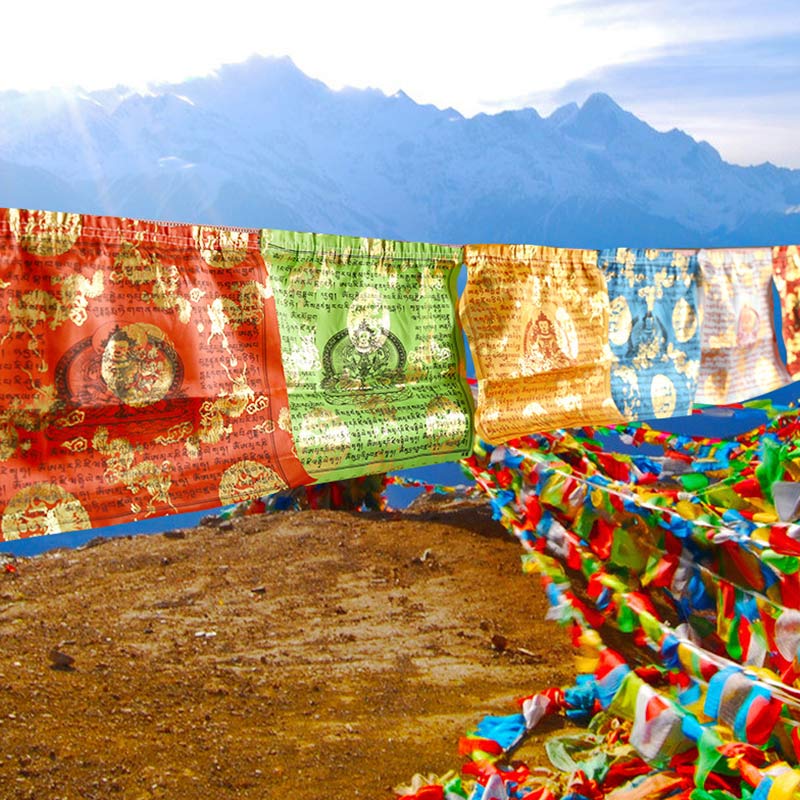
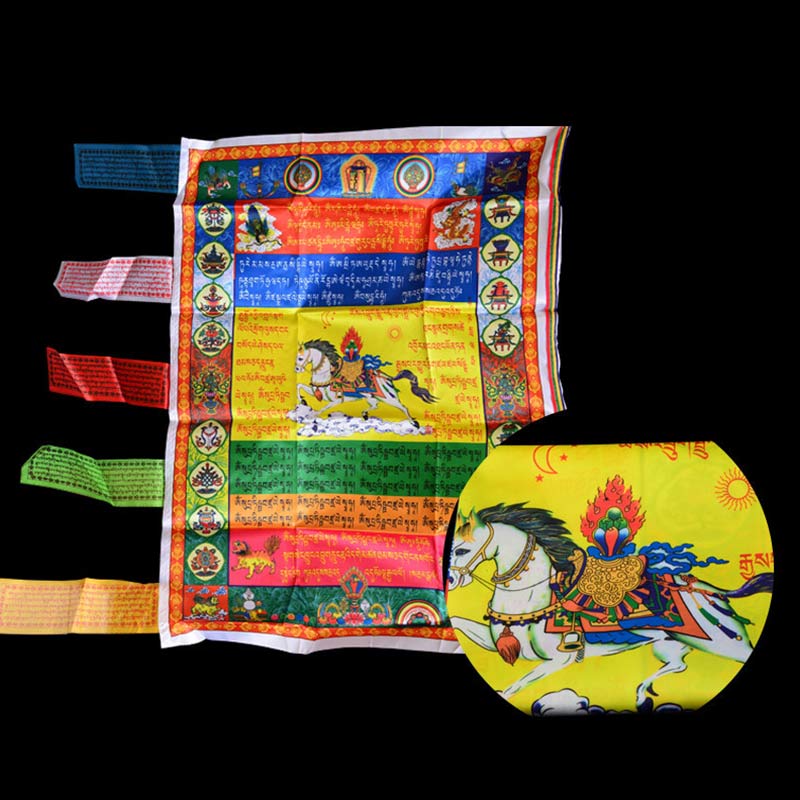
Tibetan prayer flags come in two main styles: horizontally strung Lung-ta (Wind Horse) sets featuring the Windhorse and Four Dignities, and vertically hung Dar Cho banners designed to increase fortune and health. Traditionally hung on high altitudes, they symbolize the power to break down obstacles and spread blessings to all beings as the wind blows.
Crafted in five distinct colors representing the elements and cosmic qualities—Blue (space/wisdom), White (air/purity), Red (fire/compassion), Green (water/healing), and Yellow (earth/stability)—they also bear sacred mantras like "Om Mani Padme Hum" to continuously generate positive energy.


When to Hang Prayer Flags: Rules and Auspicious Timing
Hanging prayer flags on astrologically inauspicious days can invite constant obstacles rather than well-being. This is linked to Baden—a demon or negative energy originating from elemental naga spirits in the Tibetan calendar. When Baden energy is active, hanging new flags brings negative results (though it thankfully does not affect flags that are already hanging safely outside).
Because these inauspicious days shift according to annual astrological calculations and vary slightly by monastery tradition, there is no static yearly calendar that works forever.
- Long-Term Rule & How to Check: Always consult a reliable, current Tibetan astrological calendar (such as the Benchen calendar or local Tibetan cultural almanacs) for the specific year to screen out unfavorable elemental days before putting up new flags.
- The Greater Rule: Nevertheless, as His Holiness the Dalai Lama and other great lamas remind us, having a pure, compassionate motivation when hanging prayer flags is far more essential than rigid calendar adherence. The core of the practice is always to express genuine goodwill and pure intentions.

Consecrating Your Flags: Setting Intentions and Smoke Purification
Set Your Intentions (Bodhicitta and Motivation)
- Deepen Your Mindset: Before touching or hanging the flags, take a moment to quiet your mind. Shift your focus away from personal ego and anchor your thoughts in universal compassion (Bodhicitta).
- Direct Your Energy: You can silently recite prayers or meditate on sending peace, healing, and happiness to all sentient beings across the universe. You can also dedicate specific positive energy toward the health, safety, or spiritual well-being of loved ones, friends, or those suffering.
Write Personal Wishes and Aspirations
- Adding Personal Touch: Many traditional and contemporary practitioners use a clean, permanent marker to write specific aspirations, mantras, or the names of family members, friends, or even pets directly onto the designated blank spaces or the back of the flags.
- Mindful Inscription: As you write each name or wish, do so with a calm and focused mind, visualizing that person receiving blessings, protection, and peace as the wind carries the prayers away.
Perform Smoke Purification
- Purifying the Elements: Smoke offerings are a traditional way to clear away negative energies and consecrate sacred items.
- Step-by-Step Practice: Light traditional Tibetan herbal incense (sang) or a natural, clean-smelling incense in a safe holder. Allow it to burn for a few moments to generate fragrant smoke.
- Passing Through the Smoke: Gently hold the bundled or unfolded flags and wave them respectfully through the rising fragrant smoke a few times. Visualize the smoke cleansing the fabric of any physical dust or energetic obscurations, transforming them into pure, sacred offerings.

Bridging Heaven and Earth: Physical Rules and Spiritual Reasons for Proper Suspension
Hanging prayer flags involves precise physical and spiritual methods. Understanding why we follow these steps ensures the practice remains meaningful and respectful:
Strict Color Order & Multiples of 5
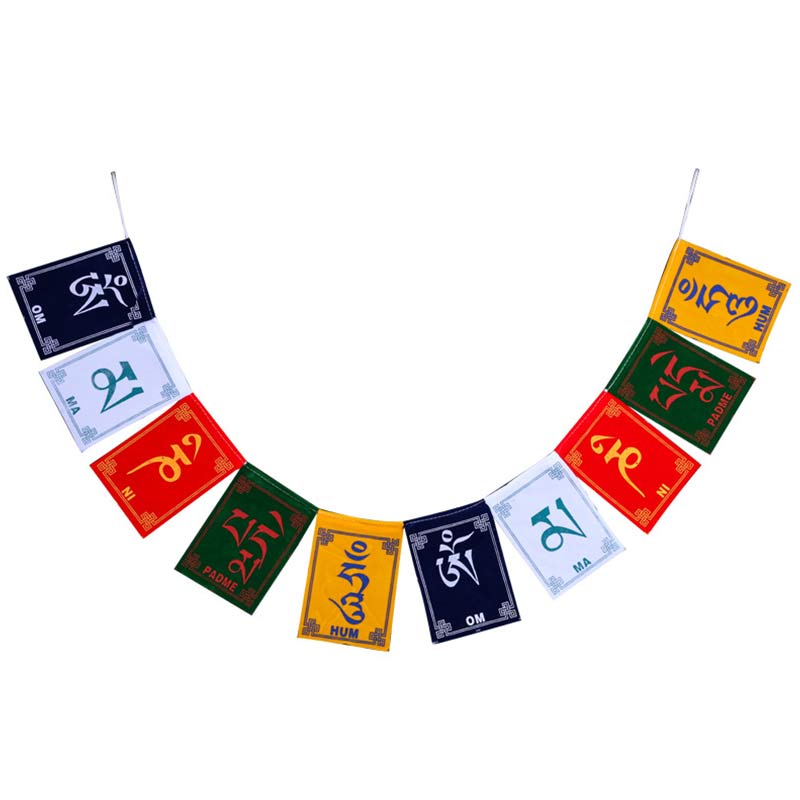
You must hang flags in strict groups of five following the repeating sequence: Blue, White, Red, Green, and Yellow. Always hang them in multiples of 5 (e.g., 5, 10, 15) and never in random counts like 7 or 13. These five colors represent the five pure elements (Space, Air, Fire, Water, Earth) that constitute both the universe and our physical bodies. Maintaining this complete elemental balance and sequence is believed to harmonize outer nature and inner energy, making the prayers complete.

Two Fixed Points & Double Knots
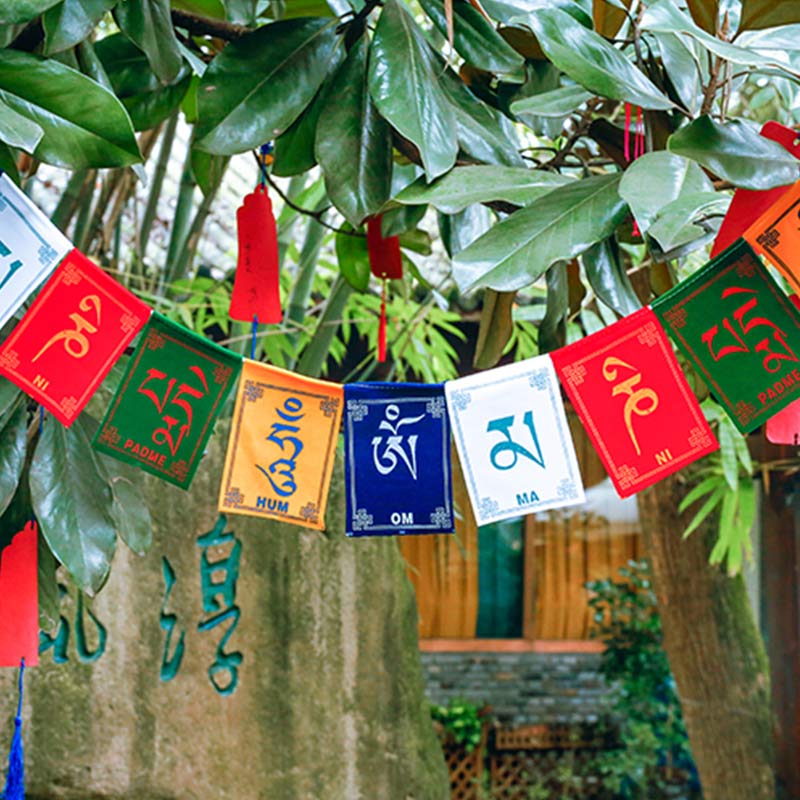
Select an outdoor breezy area between two structures (such as posts, trees, or roofs). Secure the ends tightly using double knots so the flags stretch like a clean banner. Using two stable fixed points with secure double knots prevents the rope from sagging, tangling, or snapping under heavy winds or snow, ensuring the flags remain fully exposed to the airflow to spread blessings smoothly.
Always Keep Them Off the Ground
From handling and hanging to taking them down, prayer flags must never touch the ground. Because the flags bear sacred mantras, holy symbols, and the names of deities, letting them touch the earth is considered a sign of disrespect toward the Dharma and spiritual texts.

Choose Sunny and Windy Days
Pick a bright, breezy day after checking your calendar. Sunlight and wind activate the physical dissemination of blessings, immediately carrying the mantras out into the world.
Understanding Color Fading
You can leave flags up indefinitely. As weather elements cause them to disintegrate and fade, it signifies that your prayers are actively traveling away to benefit all beings. (Synthetic materials fade slower than cotton).
Respectful Disposal of Old Prayer Flags
When the time comes to take down old, worn-out prayer flags, they must never be treated as ordinary waste. Never throw them into household garbage. Because they carry sacred mantras, holy symbols, and spiritual prayers, throwing them into the trash is considered a grave disrespect.
Instead, they should be disposed of respectfully through one of two traditional methods:
- Burning in a Clean Fire: Offer them to a clean, respectful fire so that the smoke can carry the remaining blessings upward.
- Burying in a Quiet Natural Area: Bury them in a secluded, undisturbed natural spot (such as beneath rocks or trees away from foot traffic).
Whichever method you choose, always ensure that the flags do not touch the ground prematurely as you place them into the fire or the dug hole.
Conclusion: Bringing Harmony to Your Space
Many people harbor misconceptions that prayer flags are meant as offerings to demigods. In reality, Tibetans believe that the gentle blowing of these flags carries sacred mantras and prayers straight to all living beings, while every subtle movement purifies the surrounding air. Remember, the best time to put up new prayer flags is in the morning on a bright, sunny, and windy day. Let's hang prayer flags for auspiciousness and universal harmony.
FAQs
Can I hang prayer flags indoors, or must they always be placed outdoors?
Traditionally and energetically, prayer flags are meant to be outdoors where wind and sunlight can activate them. Hanging them entirely indoors (like in a closed, windowless room) defeats their core purpose, as stagnant indoor air cannot carry the mantras outward. If you live in an apartment, Prayer flags can also hang on balconies or outward-facing windows where wind and sunlight can activate them.
What is the ideal height or placement direction (cardinal points) when hanging prayer flags around a home?
Place them above waist or head level. Direction follows tradition, but steady airflow is the most practical consideration.
Can I re-use or re-string old prayer flags that I took down from another location?
No. Once prayer flags have been hung, exposed to the elements, and taken down, they have completed their cycle of spreading blessings and absorbing energetic obscurations.
If a sudden severe storm or heavy winter snow damages or snaps my newly hung prayer flags, what should I do?
Collect damaged flags respectfully, then burn or bury them properly. Replace them with new flags after the weather clears.


